
3 posts tagged with "backstage"

View All Tags

Rebuilding Our Backstage Integration for Platform Adoption

· 9 min read
Derik Evangelista
Engineer @ Syntasso

We at Syntasso are very proud of the SKE Backstage integration we built. You apply a Promise, and a Component and a Template automagically appear in your Backstage instance. You can send requests to the platform via GitOps or directly via the Kubernetes API. Changes to the Promise regenerate the Template. You can use an array of CRD properties to control the validation applied to the form, and you can run custom containers to customise what the platform generates.

It is great.

Except, it kinda looks like this:
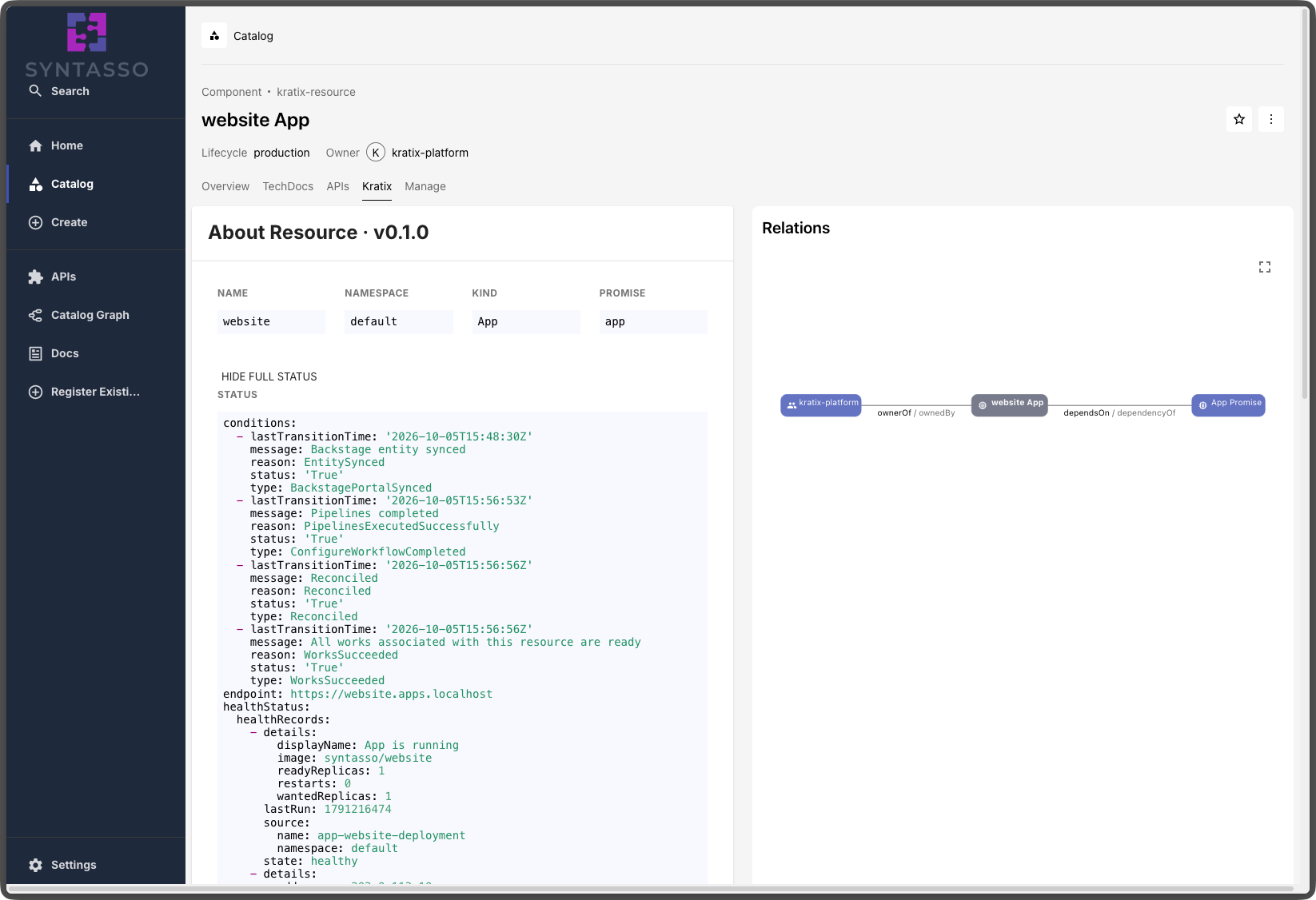
The original Resource page in Backstage, showing the resource status as raw YAML

Which is enough to get you started, but it won't necessarily wow the platform users. It solved the immediate problem for the platform engineer (how do I expose this service on Backstage?), but it was quite simple on the visual front. Apparently raw YAML is not everyone's cup of tea… not sure why. it better.

In this post, we will explore why the interface matters and how it can drive adoption of your platform. We'll look at what we had before, what we have learned from our customers, and how we used that learning to improve the out-of-the-box experience with Backstage. We will then look at what we have just released to make it even better.


Kratix, Backstage, and OIDC

· 16 min read
Derik Evangelista
Engineer @ Syntasso

The newly released version of the SKE Backstage plugins will no longer rely on a Git repository to perform CRUD operations on the Kubernetes Cluster. Instead, they will now use the Kubernetes API to manage the resources directly. This enables users to get the most up-to-date information on their resources, as well as manage resources created via other means, like via kubectl.

One important aspect is that you can now use the plugins with OIDC providers, allowing you to have finer control over the authentication and authorisation process.

In this blog, we'll go through the process of setting up your Kubernetes Cluster with Keycloak, and configuring Backstage to use it for authentication. We will then configure the SKE Backstage plugins to use the OIDC token provided by Keycloak.


September Product Update

· 5 min read
Cat Morris
Product Manager @ Syntasso

Hi friends 😊 I'm Cat, Product Manager here at Syntasso, and I've been listening to you, our avid followers. "Cat, we love Kratix, and we love your team; we want an update!" I hear you scream, so here I am, delivering this top-quality content. You're welcome.

Given that this is our first Kratix Product Update™ (not really ™), I wanted to shout about some of the great work the team has done over the last few months, so we're going back a bit further than we usually will… Indulge me; it was my birthday this month.

TL;DR​

If you only have 10 seconds spare to read this blog, these are the features you need to know about:

  • We have two CLIs now! One for building promises and one for installing SKE (Syntasso Kratix Enterprise)
  • Setting permissions just got a little bit easier
  • If you like Backstage, you’ll like what we’re up to